Glancing back at Charis : 2020 in the rearview

I hate New Year’s posts. Wasn’t gonna do one, but then this week happened and I kinda changed my mind.

“…you heard [the Gospel] and understood the charis of God in truth.” (Colossians 1:6b)

Charis. It’s a Greek word, found over one hundred fifty times in the New Testament. Strong’s defines charis as the divine influence on the human heart, and the response, especially thankfulness.

Charis. Grace. I don’t usually pick a “word for the year” or any other such trendy activity. But if I had, that would be the word of the year for 2020.

Charis. The divine influence on the human heart. It marks every moment, from the freshness and anticipation of the beginning, through the many tears and agonies of isolation, and the uncertainties and constant change of the pandemic response, all the way through to the end of the year and the many good and hard changes that continued there.

March brought the lockdown and agonies of loneliness such as I’ve never known before. Losing all social outlets AND church gatherings AND most of your work hours in one fell swoop is especially challenging for those who live alone. If not for a few faithful friends who welcomed me into their homes despite the yet-unknown risks, I’m not sure I would have come out of that with my sanity intact. They were God-with-skin-on to me in that time. Charis. Grace.

April continued and intensified the isolation and uncertainty. There was the felt betrayal from the church as all formal gatherings ceased just when I knew my need of them the most. As work hours continued to disappear, I wasn’t sure how I’d pay the rent. The isolation and fear got so bad I sometimes ended up curled in a corner of the sofa, as deep sobs tore through me. But. Charis. Grace found me again. Clandestine visits and quiet prayer meetings. Odd jobs provided income. Generous gifts paid the rent. I survived, and didn’t lose my apartment, and dared to hope that things might get better again and maybe we didn’t live in Communist America after all.

May brought some relief, as work hours picked up again, and even brought better conditions and new clients whom I grew to love dearly. Bits of normalcy came back. (Normalcy is a form of charis.)

Summer. Church began to meet openly again, and we appreciated each other like never before. Tears of joy streamed as we sang and worshipped together. I helped care for a friend who had COVID. The total lack of fear I felt was charis. (So was getting a negative test and not losing work hours to quarantine!)

Fall brought Bible school. My first ever, and it was good. Words can’t describe the work God did in my heart in those hours of worshipping and walking and listening. Charis.

Late fall and early winter brought a rush of good things. This lovely little farmhouse with it’s long lane and peaceful setting. A housemate whose very presence has been healing. Growing and deepening friendships. Continual growing and new surrender in Christ. Charis.

This week, somehow, was a culmination of all that. A time of breaking and surrender and discovering the goodness and grace of God rich in the midst of the tears.

As I close out 2020, I’m asking:

What if the kindest thing that God could do is to allow us to come to the end of our own strength and fail utterly? What if our weakness was His mercy? What if our absolute inability was His opportunity to live out His abundant ability through us?

What if being strong and having it all together was not the most important thing? What if, instead, we live best and most joyously when we surrender? What if His strength really is made great in our weakness?

What if we are designed to live as beloved children, dependent and needy? What if ours is the paradoxical joy of knowing that we are utterly outmatched of ourselves (but our Champion is Jesus and He already won!)?

It's been a rough week, a fitting ending to 2020 somehow, of coming to the end of myself, again and more completely (although I'm under no illusions that the process is finished). And as I do, and relax into HIS strength and peace and love... Well, I'd have it no other way. Because this is better than being strong. This is charis. This is grace, and I’m grateful.

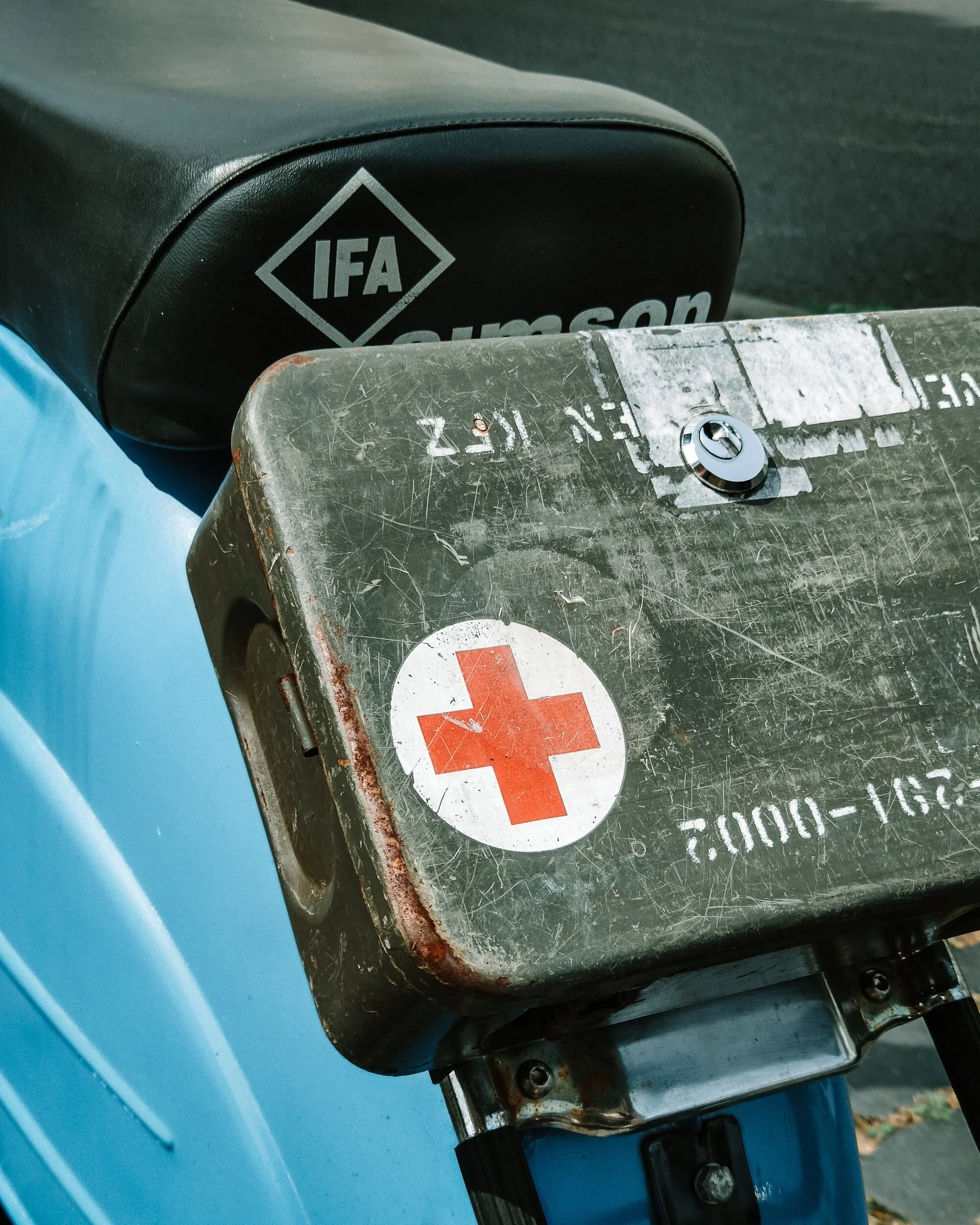
Build Your Own First Aid Kit

Image courtesy of Unsplash

Image courtesy of Unsplash

There are two general types of first aid kits: trauma kits and ouch pouches/booboo bags. The armed forces use IFAKs (Individual First Aid Kits) that are geared for massive hemorrhage and breathing issues, because statistically those are the highest numbers of preventable deaths on the battlefield. If you look for military grade first aid gear, that’s what you’ll find.

But IFAKs don’t have what you need for the everyday nicks and scrapes. For the average citizen, a trauma kit isn’t useful and frequently ends up getting left behind. This is where the ouch pouch comes in. It is a good idea to have both the trauma kit and the ouch pouch in your vehicle, and extra ouch-pouches stashed in various places, including on your person.

Here is a quick overview of what you may want to put into each type of kit. Note that there is very little overlap. If you choose to carry a trauma kit, be sure to include the supplies from the ouch pouch. Supplies are chosen for their usefulness, light weight, and ease of carrying rather than any attempt at comprehensiveness.

Ouch Pouch

  • Bandages (regular and knuckle)

  • Bacitracin or triple antibiotic ointment

  • Aspirin (Chewable tablets like this are a great choice as a combination pain reliever and first line treatment for a heart attack)

  • Ibuprofen or Tylenol, as preferred

  • Duct tape (a short length wrapped up in lieu of the whole bulky roll)

  • Elastic bandage (this is bulky, so I opt to leave it for the larger trauma kit)

  • Benadryl/diphenhydramine (travel packs take up little room )

Trauma Kit

·       Tourniquet (the C-A-T is recommended. SWAT-T or Soft-T are also popular choices)

·       Elastic bandage

·       4”x4” gauze (enough to have a nice thick wad)

·       Rolled gauze (2 or 3, if you have room for them)

·       Nasal pharyngeal airway, 28 french

·       Chest seal (make sure you have a two-pack, in case of entry and exit wounds that need to be sealed)

·       Gloves (get your size, but get the stretchy kind, in case someone with larger hands than yours needs to use them)

·       Trauma shears

·       Sharpie

It is pretty popular to include a decompression needle in trauma kits. If you have the training to properly use one, by all means go ahead. Otherwise, you may want to skip it. Improper use can kill someone who wouldn’t have otherwise died, and that is really not what we’re trying to do here.

Where possible, I have provided links directly to manufacturer’s websites for tactical gear. These folks have put a lot of effort into developing the best possible product, and it isn’t worth the risk of getting a cheap imitation elsewhere. (Note that Amazon links are affiliate links. That means I get a few pennies when you order using the link, at no extra cost to you.)

This Sacred Body

Image from Unsplash.

Do you not know that you are the temple of God and that the Spirit of God dwells in you?

1 Corinthians 3:16

This, to me, is one of the most amazing verses of the entire New Testament. That this body, is this temple. I look for a long minute at my unevenly tanned arms and very ordinary body. Poke the soft rope of muscle. And look again, bemused. This is the TEMPLE, the dwelling place of Almighty God.

The temple is a holy place. A sacred space, open only to the privileged few. And now, WE are the Temple. We are the dwelling place of the Spirit of God. Our bodies house the living God, in some mysterious and incomprehensible way.

This being so, it seems to me that we should give a little bit of attention to how we feed and clothe and care for these bodies. Not because our bodies are so important, but because these short-lived bodies are the temporary temple of the most Holy.

This premise, that we are the temple of God, is the foundation for all the rest of what I do and write about health. This is the primary reason, really, why taking care of our bodies actually matters. Every other reason is secondary and of little importance, compared to this.

This thing of being the temple is quite practical, too. You are created to worship the King, to be an ambassador of the Kingdom, and to make His name great. There are some everyday implications from these realities.

Obviously, a temple should be clean. Dedicated to worship. But this doesn’t mean becoming a monk or a nun who lives in a cloister and avoids the mess and hustle of real life. Worship extends far beyond contemplation and music making. Worship includes the entirety of your life; work and play and relationships and everything else. Worship includes the everyday ordinary actions of your life.

“Even before I was born, you had written in your book everything I would do” (Psalm 139:16). “For we are his workmanship, created in Christ Jesus for good works, which God prepared beforehand, that we should walk in them” (Ephesians 2:10).

God knows everything I will do. And he prepared specific good works for me to walk in. I started asking Him what those works are, what the things are that He has prepared for me to do. I have been amazed at the simplicity and directness of His leading, in response to those questions.

I suggest taking an afternoon, or perhaps all day, and finding a quiet spot where you can pray aloud without hindrance or distraction, and asking God to show you the paths that He has laid out for you, the things He wants you to pursue next, the educational opportunities and training that He intends for you to have. Write down what you think He is showing you. Do this every few months, or at the least, once a year.

Continue to seek God. Ask Him to show you what your specific next steps and bigger role is within the Kingdom. Ask Him to give you a burning passion to see your work fulfilled.

This burning passion, this work that must be fulfilled (for it is yours alone and you are commissioned thereto by the King Himself); this will lead to a desire to have a body and soul and spirit that is capable of fulfilling this work. Pursuing good health becomes both an act of worship and a practical means to walk in your particular calling within the Kingdom.

Appendix 1: Resources

First, my own blog: The Gesundheit Ministry Blog. You are already here, reading the Resource section with clickable links, as promised in the print version of my book, As Your Soul Prospers.

The rest of these resources are from people a lot smarter than I am. I have read or listened to all of these, and their ideas, principles, and information have shaped the way I live, think, and teach. However, most, if not all, have some areas, ideas, or interpretation with which I disagree. Note that not all are “Christian” resources, particularly when it comes to dietary and nutritional information. All authors do, however, have a commitment to truth as observable and verifiable by science rightly used and/or in scripture, and all offer valuable information. Read with discretion and the realization that all human knowledge and understanding is incomplete and contains at least some errors.

How to Live Like a King’s Kid, by Harold Hill. Bridge-Logos, Alachua, FL. 1974. https://amzn.to/2WG3WtQ If you are only going to read one book from this list, I recommend that you start with this one. In simple words and with great joy, this is the story of one man who decided to live as if the Manufacturer’s Handbook [the Bible] was meant to be taken as truth.

Prescription for Nutritional Healing (2nd edition and up), by Phyllis and James Balch. Avery Books, New York, NY. 2000. https://amzn.to/2BkqxF4 This is my go-to resource for non-pharmacological treatment. You will find it well worth the cost. Currently, I believe the fifth is the latest edition, but previous editions are also worthwhile.

Exploring Emotions by Martha Ann Shirk. Carlisle Printing of Walnut Creek, OH. 2017. Author Contact: 794 Gristmill Road, Ephrata PA 17522. Phone and fax: (717) 445-5517 [Note: not available through online sellers. Check your local bookstore or contact the author.] This simply written book provides children with the vocabulary to recognize and express their emotions. I found it useful as an adult too!

Strong Women, Soft Hearts by Paula Rinehart. https://amzn.to/3fMAtWS Thomas Nelson, Nashville TN. 2001. Highly recommended for women who struggle to open up emotionally. This book contains a workbook section in the back, which was instrumental in my own journey of recovery from abuse.

A More Excellent Way, Revised Edition, by Henry Wright. Whittaker House, New Kensington, PA. 2009. https://amzn.to/39bVlEi This is the only book on health that I have found that is totally biblically based. The author focuses almost solely on the spiritual roots of disease and does not sufficiently address the physical components. I do not recommend this book as a sole reference, but as part of a larger library.

Boundaries, by Cloud and Townsend. Zondervan, Grand Rapids, MI. 1992. https://amzn.to/2CQDiaQ The authors address the challenging and much needed topic of boundaries in this classic book. As you begin to walk more fully in your calling in the Kingdom, it is absolutely crucial to be able to say no to anything that is outside that calling. Many Christians, especially women, find it very hard to say no. This book can help you learn why it is so hard and give you tools to begin to say no (and yes!) at the appropriate time.

Victory Over the Darkness, 2nd Edition, by Neil Anderson. Regal Books, Ventura, CA. 2000. https://amzn.to/32BBkWx Besetting sin. Habitual sin. Strongholds. Whatever you call them, this book is one of the simplest and most direct handbooks for spiritual warfare that will enable you to get and stay free through the power of God.

Land of Promise Seminar. https://www.straitpaths.com/land-of-promise-conference This four-day experience is well worth the (incredibly low) price tag. This event focuses almost entirely on spiritual health and connecting to God, but the impacts on soul and body are often quite dramatic.

When Pigs Move In, by Don Dickerman. Charisma House, Lake Mary, FL. 2009. https://amzn.to/2CyF6Fo In simple story form, this engaging and easy to understand book outlines the principles of freedom from demonic influences.

Gripped by a Dark Hand, by Paul Weaver. Ridgeway Publishing, Medina, NY. 2014. https://amzn.to/2ZHPCTA Revealing occultic connections in some alternative medical practices, this book specifically targets the plain Anabaptist audience.

The Biblical Guide to Alternative Medicine, by Anderson and Jacobsen. Regal Books, Ventura, CA. 2003. https://amzn.to/3eNg82n This resource helps you decide among holistic treatments through a biblically based, medically authoritative lens.

The Maker’s Diet: The 40-day Health Experience That Will Change Your Life Forever, by Jordan S. Rubin. Siloam, Lake Mary, FL. 2004. https://amzn.to/2Cv2DqT Biblical health from a Messianic Christian perspective. While this book does not fit into the grace-based perspective I advocate, it does provide valuable information, especially for those dealing with serious health issues who need to take a more stringent approach to regain health.

Anatomy of the Soul, by Curt Thompson. Tyndale House, Carol Stream, IL. 2010. https://amzn.to/39cfmuo One of the best resources I have yet found for explaining the body-soul-spirit connection from a medical/psychological/Christian physician perspective. Dr. Thompson is a better speaker than writer, so I recommend attending a live event if possible. Alternatively, you can find excerpts from his presentations on YouTube. For example, this one: https://youtu.be/dBBsNoC1D50

Switch on Your Brain: The Key to Peak Happiness, Thinking, and Health, by Caroline Leaf. Baker Books, Grand Rapids, MI. 2013. https://amzn.to/2CTidwc Recommended with caution. Lots of good information, but occasionally deviates from Scriptural truth.

Authentic Happiness, by Martin Seligman. https://amzn.to/3fWjS2Y This book provides a though-provoking secular look at the need to be serving “someone or something larger than ourselves.” The appendices are particularly worth reading.

It Will Never Happen to Me: Children of Alcoholics, by Claudia Black. Ballantine Books, New York, NY. 1981. https://amzn.to/2OX3Euq This is the classic book for understanding the roles that children learn to play in dysfunctional families. Based on the three unspoken rules of don’t talk, don’t tell, don’t feel.

World Health Organization definition of health. https://www.who.int/about/who-we-are/constitution.

Truth Study. For a comprehensive study of all Greek words translated as “truth” and it’s variations, see this document: https://www.ekklesia4him.net/Truth_study.pdf

A Jewish perspective on entering the Holy of Holies. https://www.chabad.org/library/article_cdo/aid/571614/jewish/Enter-the-Holy-of-Holies.htm

Weston Price and Wise Traditions

The following resources are from the Weston A Price Foundation.

The Broken Food System (a good overview of foods and non-foods)  https://www.westonaprice.org/journal-summer-2013-our-broken-food-system/

ABCs of Nutrition (a compilation of links to articles, podcasts, and slides on various aspects of nutrition) https://www.westonaprice.org/abcs-of-nutrition/

Healthy Traditional Diets (slides with notes, from a seminar in 2018. Lengthy, but perhaps the easiest way to get an overview of the Wise Traditions principles) https://www.westonaprice.org/health-topics/abcs-of-nutrition/healthy-traditional-diets/

Nourishing Traditions: The Cookbook that Challenges Politically Correct Nutrition and Diet Dictocrats, by Sally Fallon https://amzn.to/2WDn38a

And, just for fun: Peterson’s Bird Guide https://amzn.to/2CYuRdk, which gave me hours of education and enjoyment as a child.

Epigenetics

Epigenetics is a complex topic, and the scientific literature is sometimes nearly incomprehensible. I include here a few of the many peer-reviewed journal articles that address the heritability of epigenetic changes, as well as the many variables. What this proves, simply put, is that epigenetic changes can be passed from parent to child, and there are many things that affect epigenetic changes.

The first article is relatively easy to understand, and is recommended reading for all, especially parents or those who are going to be parents. The others are more technical and therefore more difficult to understand but are included for the science geeks among us.

Epigenetics across the human lifespan. 2014. https://www.ncbi.nlm.nih.gov/pmc/articles/PMC4207041/

Environment-Sensitive Epigenetics and the Heritability of Complex Diseases. 2011. https://www.ncbi.nlm.nih.gov/pmc/articles/PMC3241426/

Epigenetic inheritance and the missing heritability. 2015. https://www.ncbi.nlm.nih.gov/pmc/articles/PMC4517414/

A Candyd Confession

Confession time.

Confession time.

This photo, right here, represents an addiction.

For more years than I care to number, I have made sure never to run out of two things: coffee and candy. My absolute favorite is the fruit gummies, especially Welch™ brand fruit snacks. But almost anything will do, even these chalky lollipop things.

I tried not to admit how much I needed them. But without fail, if the candy stash was getting low, I found a reason to go grocery shopping. I would barely even admit it to myself, but there was a definite sense of panic that I might run out.

I mean, it was so bad that when the shutdown hit, back in late March, my pandemic shopping included a large bag of fruit snacks. In addition to the two I already had. Just in case.

Ah, but the story doesn’t end there. It would have. Or I should say, that chapter would still be continuing, except that Author ended it. In His gentle way, he started a new chapter, and invited me to join in.

The new chapter actually began a good ways before the old one ended. For around two years, I’ve been sporadically studying the New Testament in search of God’s ways for health. And the things I found there have been steadily changing me, down deep inside.

I discovered, as I read, that Jesus heals. A lot. Just start skimming the Gospels and you’ll see what I mean. But the other thing I discovered was maybe even more important. God cares about things being real. He hates fakeness, pukes it out even.

And I began to be convicted that this hatred of fake things should permeate every aspect of His people’s lives, too. Not in the sense that we will only have the best name brand clothes, or only “real” Louis Vitton or whatever the current cool brand is to have. Not at all. But rather that we care about things being what they say they are. Including food.

As I said, I’ve been seeing this for going on three years. Jesus heals. And He hates fake stuff. But it is only in the last two weeks, as I’ve been praying and working and wrestling with writing a book of these things, that I’ve been convicted as never before. Eyes opened to just how much fake food I eat.

Three different people messaged me, this week alone, asking about inflammation and gut health. I told them all the same thing. Eat real food and cut the sugar. And I didn’t admit how much of a problem I had, doing the same.

Because, candy. It’s been a week, I think, since I had one. The last few lollipops just sit there in the cupboard.

In this week, I’ve been fighting a sore throat, and deliberately avoiding all sugar. And I feel better, even though whatever-it-is is still stubbornly hanging on in my throat.

Today, I opened that cupboard door to retrieve something else and stood there for a minute, looking at those lollipops. And my hypocrisy and stubbornness hit me in the face. I pulled them out and carefully arranged them on a white piece of paper to have their picture taken. Then I sat down and wrote out this confession.

I’m gonna go throw them in the trash. And then I’m going to put some meat on the grill. Real meat. I’ll eat it with a real salad.

Oh, and one last thing. If you want to join me in intentionally living like this, eating real food and throwing out the fake, I’d love to hear about it. I have a feeling I’m going to need all the accountability I can get!

PS: One last, last thing. If you do decide to join me, this ain’t any all-or-nothing challenge. This is direction, an intentional moving toward a goal. And for sure, this is not a diet! This is not about no sugar, no Cheetos, no snack foods, no whatever. This is about what we choose MOST of the time, not about a treat every once in a while, or eating the candy some sweet little kid wants to give me. Because food freedom is very clearly also a part of the New Testament life of the Church, and I want to embrace that too. But for right now, that addiction must go, so I’m throwing out the candy. Yours will look different, if you choose to join in. And that is more than okay.

PPS: The book I mentioned in passing is about two weeks from printing. As Your Soul Prospers: Biblical Principles for Wellness. The book will be available immediately through Amazon, and plans are that it will be both print and ebook, for your reading pleasure. I’m super excited and can’t wait to share it with you all!